Beyond brain fog
Cognitive Rehabilitation Therapy is a medically recognised intervention to restore, optimise and protect brain function after injury, illness or decline.
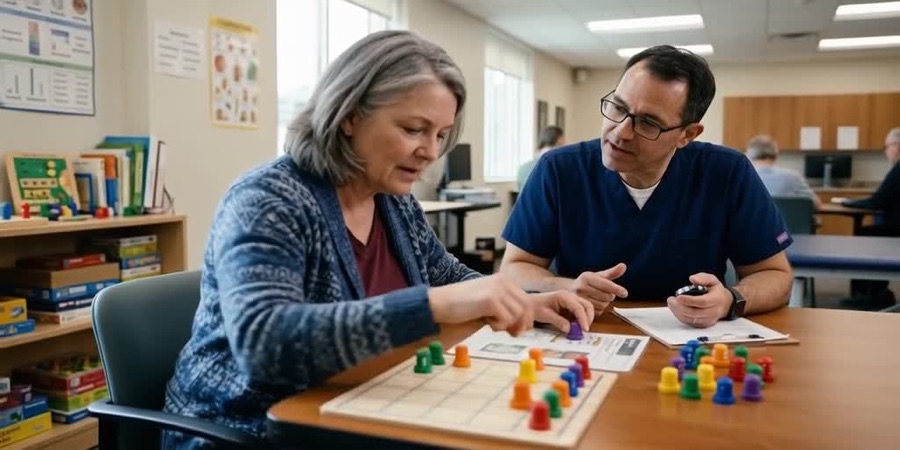
Rather than relying on generic brain games, CRT is a highly structured, personalised process that targets the brain's natural ability to remodel its own neural architecture.
Our clinical protocols achieve that through two distinct, scientifically proven mechanics. Most people need both.
Two mechanics
Restorative. Repetitive, targeted mental challenge that directly reinforces, repairs and physically rebuilds weakened or damaged neural pathways.
Compensatory. When a pathway is permanently damaged, this teaches the brain targeted behavioural strategies and workarounds. It creates entirely new neural detours, letting you bypass the damaged area and perform daily tasks efficiently.
Children: neurocognitive rehabilitation
A blended, holistic strategy for neuro recovery.
Advanced technology integration
Modern protocols pair traditional clinician led therapy with computer assisted cognitive training and immersive virtual reality. Peer reviewed clinical data indicates this blended combination yields substantially better improvement in executive function, attention and memory than older isolated methods.
The mind, body and emotion connection
Cognitive recovery does not happen in a vacuum. Clinical data emphasises that secondary factors, specifically anxiety, stress and physical strength, directly dictate how fast the nervous system rewires. Real rehabilitation addresses emotional regulation and nervous system stability alongside the mental exercises.
Questions people ask
What is Cognitive Rehabilitation Therapy?
A scientifically grounded, medically recognised intervention designed to restore, optimise and protect brain function after injury, illness or cognitive decline. It is a structured, personalised process that targets the brain's ability to remodel its own neural architecture, not a set of generic brain games.
What is the difference between restorative and compensatory therapy?
Restorative therapy uses repetitive, targeted mental challenges to reinforce, repair and physically rebuild weakened or damaged neural pathways. Compensatory therapy is used when a pathway is permanently damaged: it teaches the brain workarounds that create new neural detours around the damaged area.
Do children receive rehabilitation too?
Yes. Paediatric neurocognitive rehabilitation pairs clinician led therapy with computer assisted cognitive training and immersive virtual reality, alongside work on emotional regulation and nervous system stability.
Start a rehabilitation conversation
Tell us what happened and where you are now, and we will tell you honestly what is worth trying.